

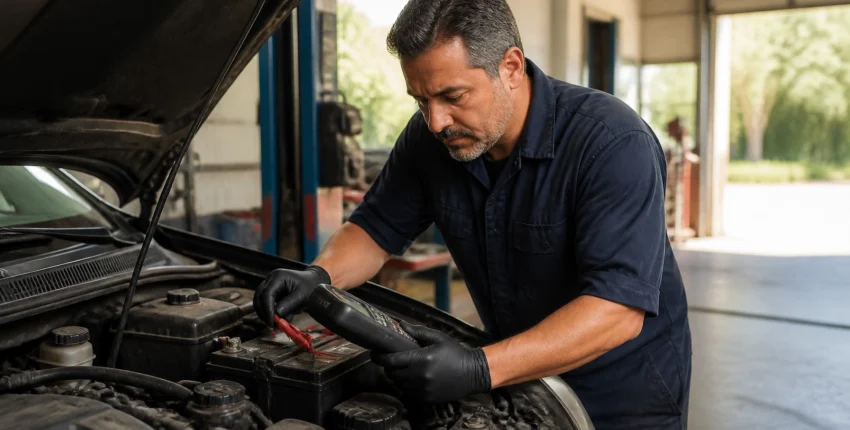
A dead battery never seems to happen at a convenient time. It happens when you’re trying to get the kids to school, heading to work on a chilly morning, or loading the car for a weekend trip. In Middletown, CT, the transition from summer heat to cooler fall mornings is an important time to think about battery health.
Summer heat can quietly weaken a car battery. Then, when temperatures begin to drop, that weakened battery may no longer have enough power to start the engine. The good news is that a little preparation now can help protect you from an unexpected no-start later.
Here are seven practical ways to prepare your vehicle: and when to consider professional car battery service from a trusted local repair shop.
Why Summer Heat Can Lead to Fall Battery Problems
Many drivers associate battery trouble with winter, but high summer temperatures can be just as damaging. Heat can speed up the chemical reactions inside a battery, contribute to fluid loss, and accelerate internal wear. Your battery may continue to start the vehicle through the summer while gradually losing its reserve strength.
Cold weather then adds another challenge. A cold engine requires more effort to turn over, while the battery itself produces less available starting power. That combination can expose a battery that seemed fine only a few weeks earlier.
Fall is the ideal season to check your battery before the first cold snap arrives.
1. Have the Battery Professionally Tested
A visual inspection cannot tell you everything about a battery’s condition. The battery may look clean and intact but still lack the strength needed to crank your engine reliably.
A professional battery test evaluates more than a simple voltage reading. It can help determine whether the battery is holding a charge and whether it is capable of delivering the power your vehicle needs during startup.
Consider scheduling a test if:
- Your vehicle has been slow to start
- You have needed a jump-start recently
- The battery is several years old
- Your car sits unused for long periods
- You notice dimming lights or inconsistent electronics
- You are planning a long trip this fall
A battery test is a small investment compared with the cost and inconvenience of a roadside breakdown. At Joe’s Auto Electric II, our technicians can help determine whether a starting issue is related to the battery, alternator, starter, or another electrical component.
2. Check the Battery Terminals and Connections
Loose or corroded connections can prevent electrical current from flowing properly. In some cases, a vehicle may act as though the battery is dead when the real problem is a poor connection at the terminals.
With the engine off, look for:
- White, blue, or green buildup around the terminals
- Loose battery cables
- Cracked or damaged cable ends
- Frayed wiring near the battery
- Signs of leaking or physical damage
Battery corrosion should be cleaned carefully, and the connections need to be tightened correctly. If you are not comfortable working around the battery, it is best to have a professional handle the inspection. Incorrectly disconnecting or reconnecting battery cables can damage sensitive electronics in some modern vehicles.
Clean, secure connections help your battery deliver consistent power and reduce the chance of intermittent starting trouble.
3. Find Out How Old Your Battery Is
Batteries do not last forever, and their condition depends on more than the calendar. Driving habits, under-hood temperatures, vehicle design, and the condition of the charging system can all affect battery life.
Look for a date code or service sticker on the battery. If you are unsure how to read it, an auto repair professional can help identify its age and condition.
A battery that has already endured several hot summers deserves extra attention before fall. Replacing a battery proactively may be inconvenient, but replacing it after you are stranded is far more stressful.
This is one reason we encourage drivers to treat maintenance as protection rather than an expense. A pre-season inspection helps protect your schedule, your vehicle, and your budget from a preventable emergency.
4. Pay Attention to Slow Cranking
Your vehicle often gives you clues before the battery fails completely. One of the most common warning signs is slow cranking.
Instead of turning over quickly, the engine may sound sluggish when you start the car. You might hear a drawn-out “rrr-rrr-rrr” before the engine finally starts. The problem may be more noticeable first thing in the morning or after the car has been parked for several hours.
Other warning signs include:
- A clicking sound when you turn the key or press the start button
- Interior lights that appear dim
- Power windows or accessories operating more slowly
- Electronics resetting unexpectedly
- Needing to try more than once before the engine starts
A single symptom does not always identify the exact cause. Slow cranking can result from a weak battery, poor connections, a failing starter, or charging-system trouble. Our guide to clicking versus a no-crank no-start explains why professional diagnosis matters.
5. Make Sure the Charging System Is Doing Its Job
A new battery cannot solve an alternator or charging-system problem. If the alternator is not replenishing the battery while you drive, the vehicle may eventually lose power: even if the battery itself is relatively new.
Possible charging-system warning signs include:
- The battery warning light on the dashboard
- Headlights that brighten or dim unexpectedly
- Electrical accessories that behave inconsistently
- A battery that repeatedly goes dead
- A burning smell or unusual noise from the engine compartment
- A vehicle that starts after a jump but will not restart later
When a battery keeps losing its charge, the right question is not always “Do I need another battery?” The better question is “Why is the battery losing power?”
Joe’s Auto Electric II provides electrical diagnosis and repairs, along with alternator, starter, and generator rebuilding. Testing the complete starting and charging system can help prevent you from replacing the wrong part.
6. Avoid Unnecessary Battery Drain
Even a healthy battery can be drained if electrical accessories remain on while the engine is off. Before leaving your vehicle, check that the headlights, interior lights, phone chargers, and other accessories are turned off.
Also be cautious if your vehicle sits for long periods. Short trips may not give the charging system enough time to replace the energy used during startup. If you drive only occasionally, monitor the battery more closely and consider having the vehicle inspected before an extended period of inactivity.
Modern cars also use electrical power while parked to operate security systems, computers, and other features. That is normal, but an aging battery has less reserve capacity to handle it.
If you suspect something is draining the battery overnight, do not keep replacing the battery without investigating. Electrical diagnosis can help identify whether a light, module, wiring issue, or accessory is consuming power when it should not.
7. Schedule Fall Maintenance Before the First Cold Snap
Battery health is only one part of getting your vehicle ready for fall. Cooler weather is a good reminder to review your overall maintenance needs.
During a seasonal inspection, ask your technician to look at:
- Battery condition and connections
- Alternator output and charging performance
- Starter operation
- Belts and cables
- Engine fluids
- Tires and tire pressure
- Brakes and exterior lighting
- Heating and defrosting performance
Middletown drivers also deal with stop-and-go traffic, changing weather, and winter road salt in the months ahead. These conditions place additional demands on your vehicle’s electrical, starting, braking, and charging systems.
Regular service can catch a small problem before it becomes a no-start on a cold morning. Our article on preventative maintenance and long-lasting vehicle performance offers more ways to protect your vehicle throughout the year.

Why Choose Joe’s Auto Electric II for Car Battery Service?
When your vehicle has a starting or electrical problem, you deserve an explanation: not a guess and not a list of unnecessary repairs.
Joe’s Auto Electric II is a family-owned and operated shop serving Middletown, CT, with a legacy dating back to 1940. Our technicians use state-of-the-art diagnostic equipment to identify the source of electrical and starting problems accurately.
As a NAPA AutoCare Center, we are committed to quality parts and professional service. We also provide transparent recommendations and competitive pricing, so you can understand your options before work begins.
Whether your concern is a weak battery, a charging problem, a starter issue, or another electrical fault, our team can help you make an informed decision.
Protect Your Vehicle Before Fall Arrives
A battery that starts your car today may not have enough strength for the first truly cold morning. Summer heat, aging components, corrosion, and repeated short trips can all reduce your starting margin before fall begins.
Testing the battery, checking its connections, watching for warning signs, and inspecting the complete starting and charging system are simple ways to reduce your risk of being stranded.
If you are in Middletown or the surrounding area and want dependable car battery service, contact Joe’s Auto Electric II before the temperatures drop. A quick inspection now can help you start the season with greater confidence.